Industrial companies that make a lot of different, complicated products must find ways to stay competitive in today's fast-paced world. If you're in this situation, dealing with unending paperwork, making a design for each order, or customer documentation that takes forever to create, there is good news: modularization is the answer.
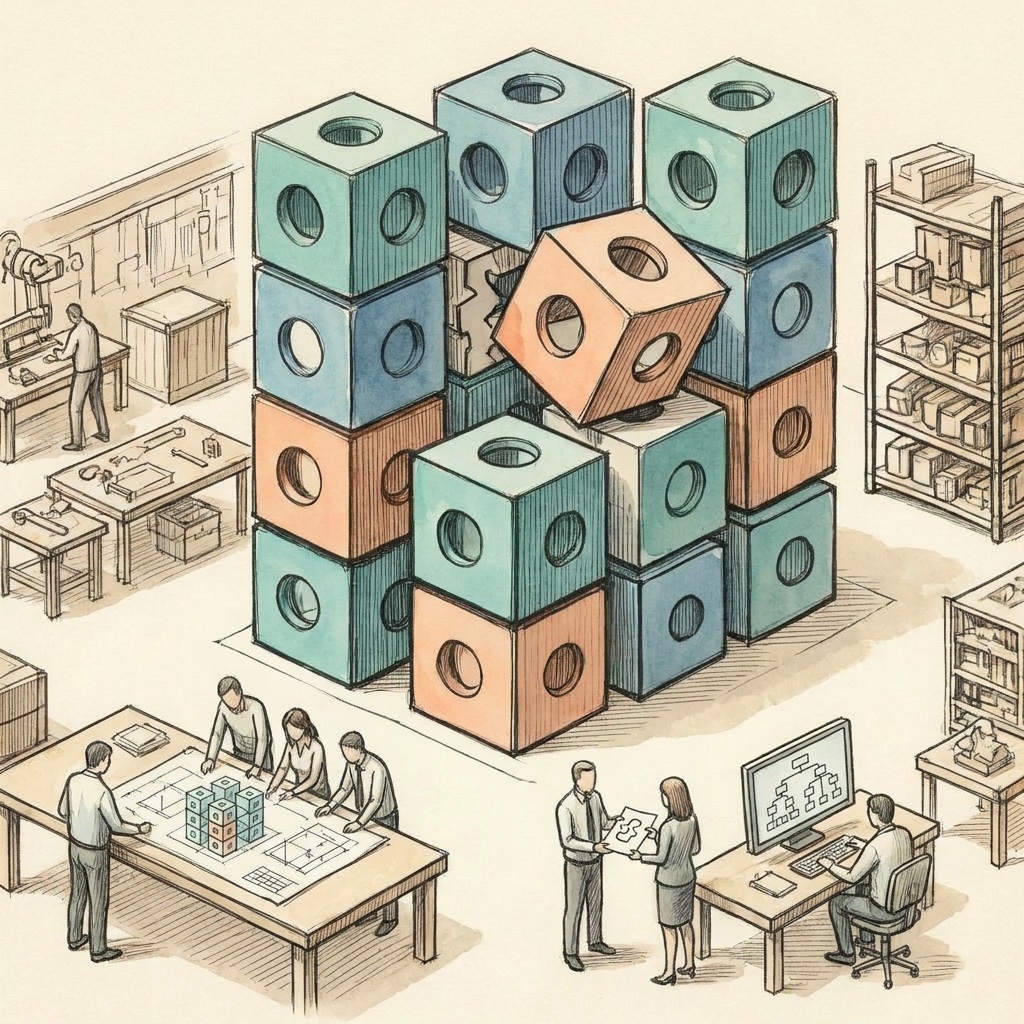
Companies can use modular product design to reuse information, eliminate superfluous stages, and optimize production and customer communication processes. The right product architecture saves time and money while allowing seamless customization without disturbing production.
Reusing information across departments
When your organization transforms to modularization, you generate reusable templates for all aspects of your workflow, from work orders to quality inspection paperwork.
- Modularization in engineering and design documentation enables engineers to reuse pre-defined building blocks across multiple product designs. This means that drawings, bills of material (BOMs), and electrical and mechanical schematics can be reused, saving up to 90% of the engineering effort.
- Modular solutions streamline production planning, eliminating the need for departments to start from scratch for each order. Production receives the same high-quality documents each time, eliminating misunderstandings and errors while enabling the learning effect.
- Quality Control and Assurance: The first product requires more quality control efforts, such as checking physical and digital tools. From the second product in a series, the effort is significantly lower. scrutiny when used for the first time.
- The modular content library makes it simple to create client-facing documents such as proposals and specifications in the sales cycle, product manuals, and maintenance instructions. This results in faster delivery, precise information, and a professional finish.
By reusing knowledge in product design and documentation, engineering services for manufacturing companies can concentrate on innovation rather than repetitive work. Mechatronic design consulting services, for example, can help simplify complex systems while assuring seamless integration of mechanical and electrical controls.
Save time with client-facing documentation.
Modularization extends beyond internal procedures to include external-facing materials like proposals, specs, and manuals. These documents are essential for providing an excellent client experience, but if each product is unique, they can take up hours of valuable time.
Here's how modular product design helps.
- Faster Sales Proposals: Sales teams can create proposals using standard modules and requirements. This saves time in drafting complex, unique bids and guarantees that the specifics are consistent with the production system.
- Customizable Product Specifications: Modular product design allows for easy customization for diverse customer needs. Clients receive precisely what they require without your team reinventing the wheel.
- The automated generation of manuals and maintenance instructions using design and manufacturing building blocks ensures clarity and consistency, ensuring that clients obtain accurate information about their products.
Smart Customization: Where and How to Integrate Bespoke Solutions?
Not every order fits nicely into a predefined structure. Buyers require specific features or customized solutions. However, the key to seamless operations is knowing how to incorporate these customizations to minimize production disruption.
This is where modularization techniques for industrial businesses come into play. By using a sensible customization strategy, you can:
- Avoid Early Customization: Adding custom choices early in production can interrupt workflow and increase costs.
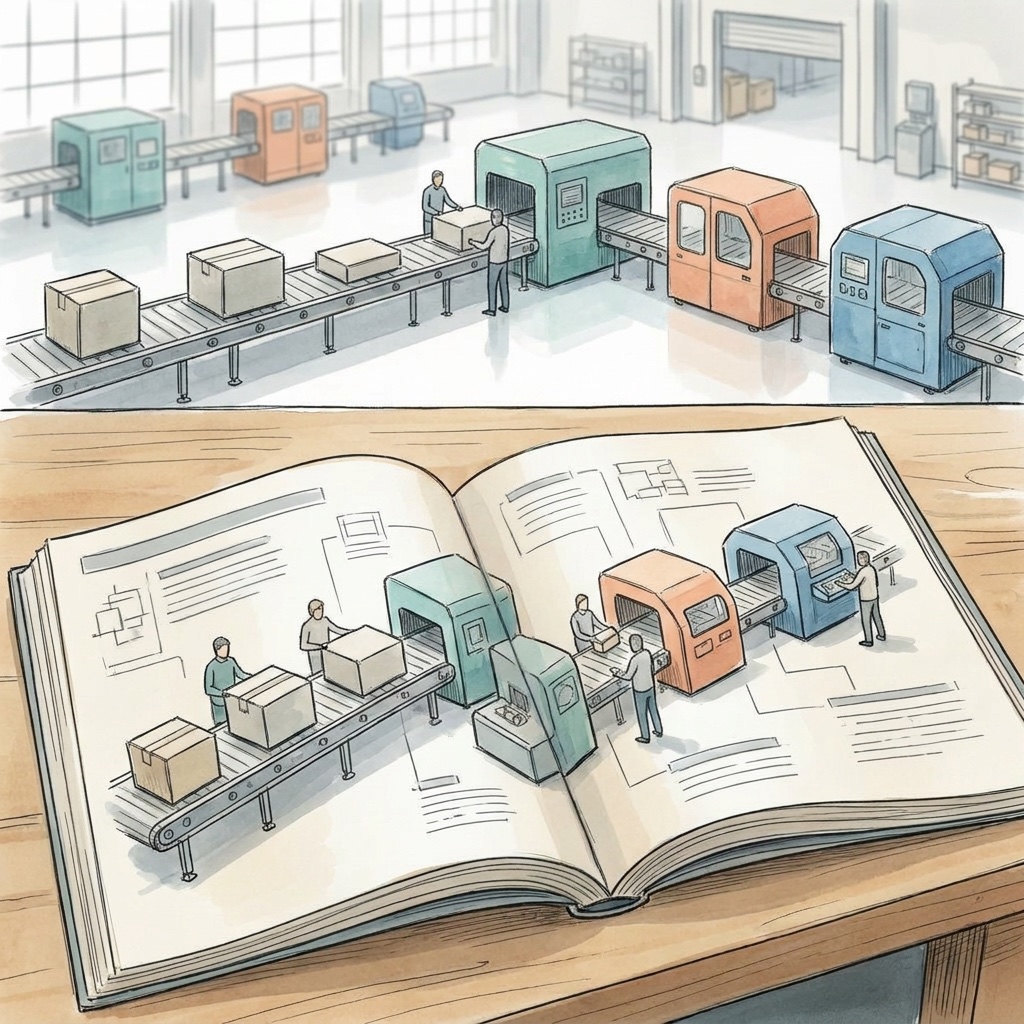
- Integrate Late in the Process: Bespoke solutions are best integrated at the end of the production line. This guarantees that typical operations stay efficient while providing flexibility for customization.
- Integrate customizable aspects, like extra features or settings, strategically into the product architecture. This helps to maintain flow without complicating production.

This method keeps your team productive, client satisfaction high, and the manufacturing floor running smoothly—even when bespoke demands are involved. We call this strategy smart customization—a balanced blend of standardization and flexibility that maximizes efficiency.
Advantages of Modularization in Manufacturing Productivity.
When industrial OEMs adopt modular design concepts, the benefits are obvious:
- Modular design leads to faster proposal turnaround and more appealing product options, increasing sales conversions.
- Standardized work processes decrease redundancy and errors, resulting in lower planning costs.
- Improved manufacturing productivity by removing non-value-adding operations and prioritizing high-impact tasks.
- Improved Product Lifecycle Management by aligning manuals and maintenance plans with production data, resulting in cost-effective maintenance and repairs.
- Modularization provides seamless integration of mechanical and electrical systems throughout design, construction, and maintenance.
Key Takeaways and Next Steps.
Modularization is the key to increasing efficiency and production if your organization deals with complex designs, a large product variety, and custom orders. Here is what you should remember:
- To save time and avoid errors, reuse information across departments, such as work orders and sales pitches.
- Selling modular product portfolios requires less detailed technical knowledge. Modular OEMs scale their organization by engaging agents in new geographic markets.
- Use modular templates to swiftly create client-facing papers, enhancing professionalism and the customer experience.
- Implement customizations late to avoid disrupting production and meet client needs with unique solutions.
- Use clever customization tactics to balance standardization and flexibility for increased productivity.
In short, modular OEMs sell fit-for-purpose products while manufacturing standards. They achieve a best-of-both-worlds scenario.
Are you prepared to alter your business through modularization?
Visit our Contact Us page to schedule a virtual meeting directly in our specialists' calendars to learn how we can help you apply modular design techniques and improve product lifecycle management.
We have helped countless clients through this transition and can help you reap additional revenue and profits while avoiding the high costs of stepping into common pitfalls.
Let's speak about how smart customization can benefit your organization.